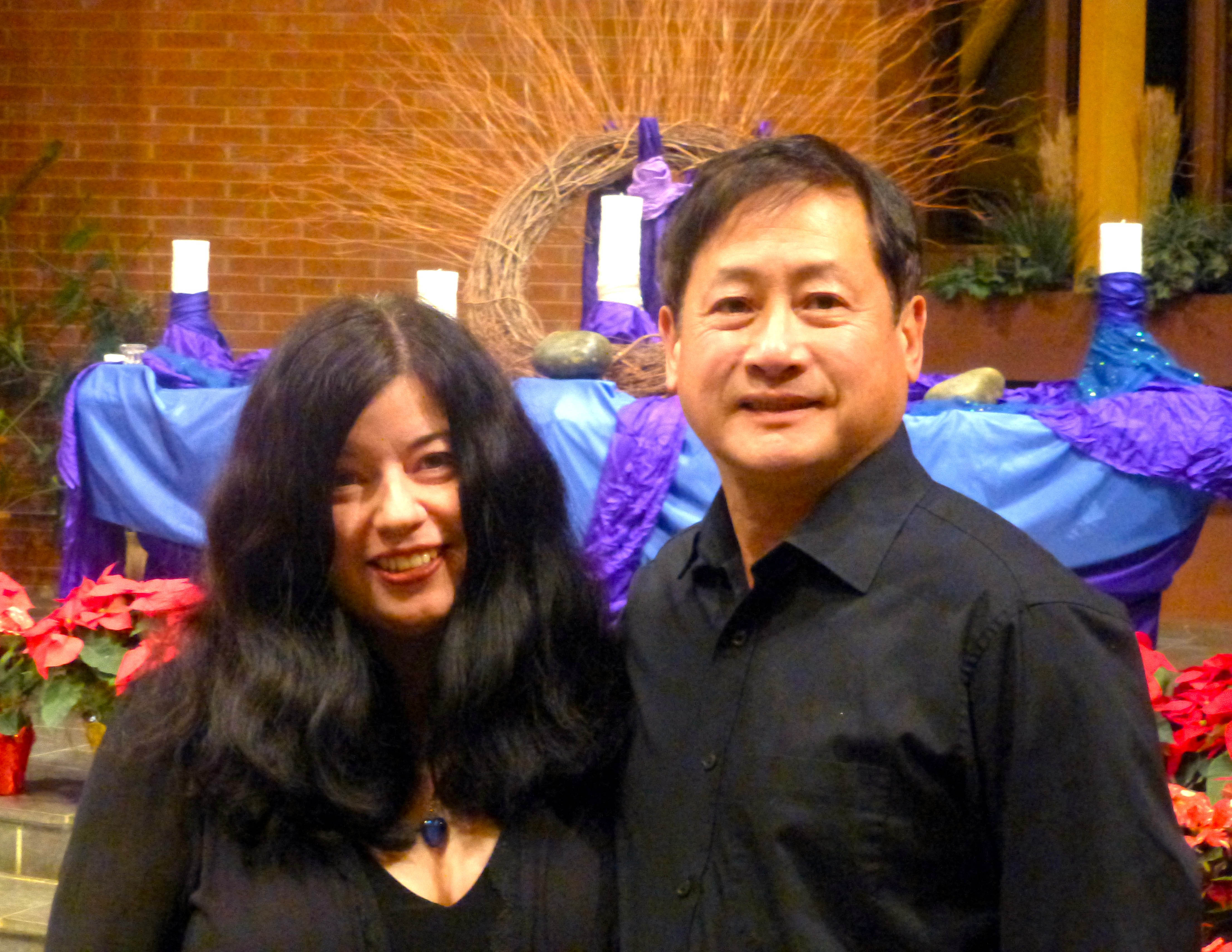
American composer Steve Reich wrote Clapping Music in 1972. It’s a minimalist piece that uses no instruments, and is performed entirely by clapping. We’d never heard of this piece until a couple of weeks ago, when we received an email from a friend, asking if we’d learn it to play at her late husband’s memorial service in Kalamazoo. He was also our friend, of course, and we were honored to be asked to do this.
We found videos of various people and groups performing this piece, and our first thought was: “Wait. We play handbells, not percussion. Can we even do this?”. We downloaded the score, and decided to have a go, but told our friend not to put it into the order of service quite yet, just in case! We really wanted to be able to do it, though, knowing how much her husband loved the piece.
How Clapping Music is constructed
Clapping Music starts with both performers clapping a basic rhythm (a variation on an African bell pattern) in unison. One performer continues clapping that rhythm all through the piece. After a certain number of measures (twelve, in the original score), the other performer claps the same rhythm pattern, but shifts ahead by one eighth note, skipping one note or rest in the rhythm and adding it to the end, in a continuous rotating of the pattern. The “skipping ahead/rotation” process continues, until eventually the pattern has come full circle. At that point, if all has gone to plan, the two performers are clapping in unison again.
This piece proved to be an interesting challenge for us. The first decision to make was which of us would play the continuous pattern, and who would play the “skipping ahead” rhythm. We opted to have Larry keep to the original pattern, and Carla to do the changing one. Both parts have their challenges. It may seem easy for the one person who keeps the steady rhythm throughout, but there’s the potential to be distracted by the other person. It takes concentration and focus, to keep playing the same thing, emphasising only the first beat of each measure, and not to be led astray by anything else you hear!
For the second person, the challenge is in making the quick changes, especially as some measures require clapping on the first beat, and others have a sneaky rest there. The tempo must be constant, of course. If anyone speeds up or slows down, the whole thing falls apart very quickly. Yes, we’re talking from experience! We started at a slightly slower tempo than indicated on the score, and had a lot of “oops” moments as we gradually started to understand more about how to make this piece work.
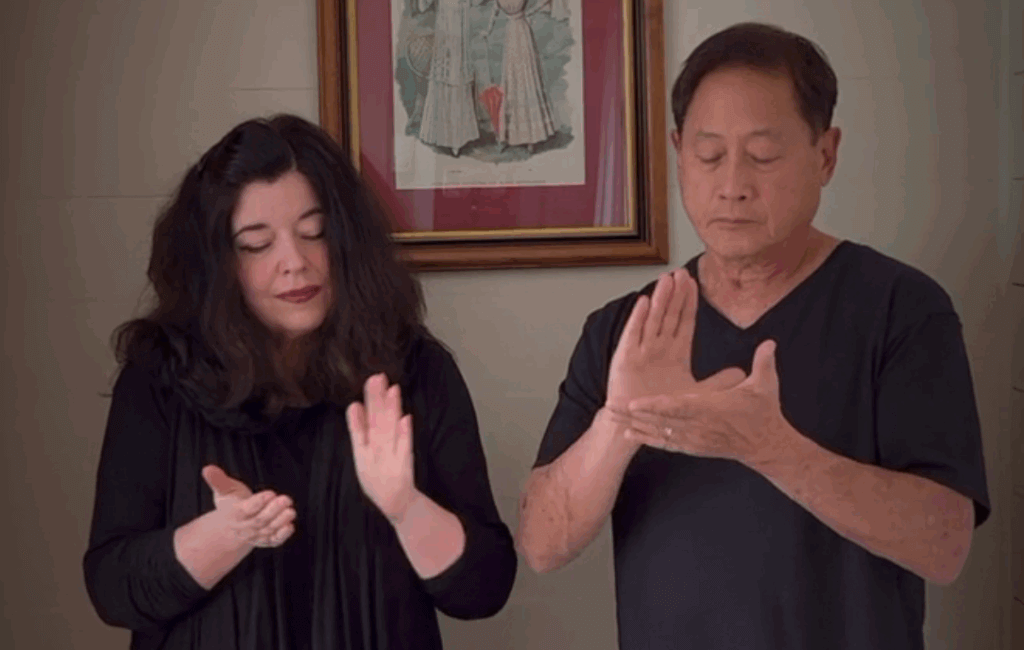
Stepping (well, clapping) out of our comfort zone!
We were surprised how much physical and mental effort it takes to play this piece. The original score calls for twelve repeats of every measure, but (after checking that we wouldn’t be the first to do it) we cut that down to four repeats, and that helped a lot. We read that the performers should try to match their sound as far as possible. We probably did a better job of that at the service than in the video we made afterwards. Having worried about sweaty palms on a hot day in church, they actually seemed to help, somehow. Unfortunately, we couldn’t replicate that when we clapped the piece again in our northern Michigan cottage!
We usually play handbell duets, so this felt like something that was far outside our comfort zone. We enjoyed the challenge, though, and plan to keep working on it! It might even be an interesting addition to our concert repertoire. If you book us for a handbell duet performance and you’d like to hear it, please let us know!
Clapping Music was very well received at our friend’s memorial service. We thought we’d make a recording to share, if only to prove that we did it. We encourage you to try it too!